
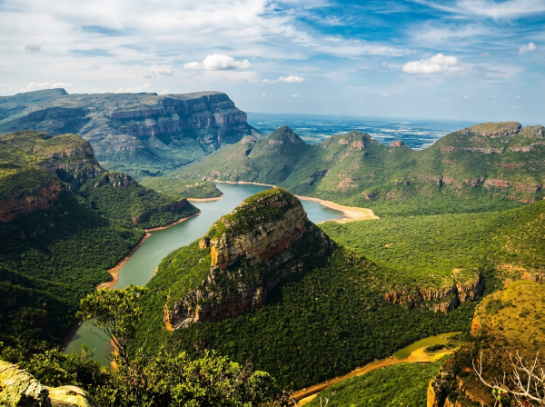
When people search for “RSA country” they are usually referring to the Republic of South Africa, commonly known simply as South Africa. RSA is an abbreviation formed from the country’s formal name, Republic of South Africa. Located at the southern end of the African continent, South Africa is known for its diverse geography, multicultural society, major cities, wildlife, natural resources, historical importance, and diversified economy.
South Africa is famous for its mountains, coastlines, savannas, semi-desert landscapes, national parks, cultural heritage, and modern urban centers. It also has a distinctive political structure with three capitals: Pretoria, Cape Town, and Bloemfontein. The country is divided into nine provinces and recognizes 12 official languages, including South African Sign Language.
This complete guide explains what RSA country means, where South Africa is located, its history, geography, population, major cities, government, economy, currency, culture, languages, wildlife, tourism, provinces, and international importance.
What Does RSA Country Mean?
RSA country refers to the Republic of South Africa, which is the official name of South Africa. The abbreviation “RSA” comes from the initial letters of Republic of South Africa. It can be used in official, political, sporting, geographical, and international contexts.
South Africa should not be confused with Southern Africa, which describes a wider geographical region containing several countries. RSA specifically refers to the country officially known as the Republic of South Africa.
The common international name is South Africa, while RSA is an abbreviation that may appear in official documents, sporting contexts, databases, organizations, and other references.
Quick Answer: What Is RSA Country?
RSA country means the Republic of South Africa, commonly called South Africa. It is a country located at the southern end of the African continent.
South Africa shares land borders with Namibia, Botswana, Zimbabwe, Mozambique, and Eswatini. The Kingdom of Lesotho is completely surrounded by South African territory, making Lesotho an enclave within South Africa.
Where Is RSA Country Located?
RSA country is located in southern Africa. South Africa occupies a large area at the southern end of the continent and has an extensive coastline along the Atlantic and Indian oceans.
Its geographical position has contributed to the country’s importance in international trade, shipping, tourism, agriculture, and regional economic activity. South Africa also has several important ports that connect the country with international markets.
South Africa borders Namibia, Botswana, and Zimbabwe to the north and Mozambique and Eswatini to the northeast. Lesotho is completely enclosed by South African territory.
The western coastline faces the Atlantic Ocean, while the southern and eastern coastline is associated with the Indian Ocean. This geographical position contributes to the country’s varied climate and marine environments.
South Africa’s location also makes it an important connection point between southern African countries and international markets.
Geography and Climate of RSA Country
The geography of RSA country is highly diverse. The country contains mountains, plateaus, grasslands, savannas, semi-desert regions, forests, wetlands, and coastal environments.
The Drakensberg Mountains are among South Africa’s most important mountain systems. They extend through the eastern part of the country and are known for dramatic scenery, hiking opportunities, waterfalls, and important ecosystems.
Much of the interior consists of elevated plateau landscapes. The western and central areas include relatively dry regions, including the Karoo, a large semi-desert area with distinctive landscapes and vegetation.
South Africa’s climate varies considerably because of its size, elevation, coastline, and geographical position. Different areas can experience Mediterranean, subtropical, temperate, semi-arid, and other climate patterns.
Cape Town and parts of the Western Cape are particularly associated with a Mediterranean-type climate, while many other parts of the country receive most of their rainfall during the summer months.
This geographical diversity is important for agriculture, tourism, biodiversity, settlement, and natural-resource management.
History of RSA Country
The history of RSA country is long and complex. It includes Indigenous societies, European settlement, colonial expansion, conflicts, mineral discoveries, industrialization, apartheid, and the transition to democracy.
Long before European settlement, southern Africa was home to diverse Indigenous communities and societies. Different communities developed their own languages, cultures, political systems, agricultural practices, trade networks, and traditions.
European involvement expanded from the 17th century, particularly following the establishment of a Dutch settlement at the Cape. British influence later became increasingly important. Competition over land, political authority, trade, and resources contributed to conflicts involving Indigenous communities, colonial powers, and other groups.
The discovery of diamonds and gold had a major impact on South Africa. Mining accelerated industrial development, urbanization, infrastructure construction, migration, and international economic connections.
One of the most important and difficult periods in South African history was apartheid, a system of institutionalized racial segregation and discrimination that operated during much of the 20th century.
Resistance to apartheid involved many individuals, organizations, and communities. Nelson Mandela became one of the most internationally recognized figures associated with the struggle against apartheid. South Africa held its first democratic election in April 1994, and Mandela became the country’s first democratically elected president.
The transition to democracy represented a major turning point. The new democratic system established a constitutional order based on democratic government, equality, rights, and national reconciliation.
Population of RSA Country
South Africa is one of Africa’s most populous countries and has a highly diverse population. People in the country have different cultural, linguistic, historical, and regional backgrounds.
Population distribution is not uniform. Major metropolitan areas attract large populations because of employment, education, business, transportation, healthcare, and other opportunities.
Important urban centers include Johannesburg, Cape Town, Durban, Pretoria, and other metropolitan areas. Gauteng is the smallest province by land area but has the largest share of South Africa’s population, according to current South African government information.
South Africa’s population is also characterized by considerable linguistic diversity. The country recognizes 12 official languages, including South African Sign Language.
English is widely used in business, government, education, tourism, and international communication, while many South Africans use other languages as their first or home language.
Major Cities in RSA Country
South Africa has several major cities, each with its own economic, cultural, governmental, and tourism importance.
Johannesburg
Johannesburg is one of South Africa’s largest urban centers and is located in Gauteng. It is a major center for finance, commerce, business, technology, entertainment, and industry.
The city developed rapidly following the discovery of gold in the region during the late 19th century. Today, Johannesburg remains an important economic center and a major destination for business and international visitors.
Cape Town
Cape Town is one of South Africa’s best-known cities and is located in the Western Cape. It is famous for Table Mountain, its coastline, cultural attractions, historic sites, and surrounding natural landscapes.
Cape Town is the legislative capital of South Africa and is home to the country’s Parliament. Tourism, finance, technology, creative industries, hospitality, and business contribute to the city’s economy.
Pretoria
Pretoria is the administrative capital of South Africa and is located in Gauteng. Many national government departments and public institutions are based there.
The city is known for its government buildings, educational institutions, historical landmarks, and jacaranda-lined streets. The Union Buildings are one of its best-known landmarks.
Durban
Durban is a major coastal city in KwaZulu-Natal. It is known for its beaches, warm climate, port facilities, tourism, and diverse population.
The Port of Durban is an important commercial facility and plays a significant role in maritime trade.
Bloemfontein
Bloemfontein is the judicial capital of South Africa and is located in the Free State. It is associated with important judicial institutions, including the Supreme Court of Appeal.
Together, Pretoria, Cape Town, and Bloemfontein make up South Africa’s distinctive three-capital arrangement.
Provinces of RSA Country
South Africa has nine provinces, not 12. The nine provinces are Eastern Cape, Free State, Gauteng, KwaZulu-Natal, Limpopo, Mpumalanga, Northern Cape, North West, and Western Cape.
The nine provinces are:
- Eastern Cape
- Free State
- Gauteng
- KwaZulu-Natal
- Limpopo
- Mpumalanga
- Northern Cape
- North West
- Western Cape
Each province has its own provincial government structures, including a legislature, premier, and executive council.
Gauteng is the smallest province by area and is highly urbanized and economically important. The Northern Cape is the largest province by land area but has a relatively small population compared with the country’s other provinces.
The Western Cape is known for Cape Town, tourism, agriculture, wine production, and its coastline. KwaZulu-Natal is known for its beaches, cultural heritage, urban centers, and access to the Drakensberg.
Government and Political System of RSA Country
RSA country is a constitutional multiparty democracy with national, provincial, and local spheres of government. South Africa’s Constitution provides the legal framework for government institutions, democratic processes, rights, and responsibilities.
The national Parliament has two houses: the National Assembly and the National Council of Provinces.
South Africa’s three capitals have different governmental functions. Pretoria is the administrative capital, Cape Town is the legislative capital, and Bloemfontein is the judicial capital. The Constitutional Court is located in Johannesburg.
South Africa’s democratic transition in 1994 was historically significant. The first democratic election took place in April 1994, ending the apartheid political system and establishing a new democratic constitutional order.
Economy of RSA Country
The economy of RSA country is diversified and includes mining, manufacturing, finance, agriculture, tourism, transportation, energy, telecommunications, and other services.
Mining has historically played a major role in South Africa’s economy. The country is associated with mineral resources including gold, platinum-group metals, coal, diamonds, manganese, chromium, and iron ore.
Gold played a particularly important role in the country’s industrial development. Although the mining sector has changed considerably over time, mineral resources remain important to exports and industrial activity.
Manufacturing is another significant economic sector. South Africa produces vehicles, chemicals, machinery, food products, metals, and other industrial and consumer goods.
Financial services are highly developed, particularly in Johannesburg. The city is an important financial center and is home to major businesses and financial institutions.
Agriculture also contributes to the economy. South Africa produces fruits, grains, vegetables, wine, livestock products, and other agricultural goods.
Tourism is another important sector. Visitors travel to South Africa for wildlife, beaches, mountains, cultural attractions, history, food, and outdoor experiences.
Currency Used in RSA Country
The official currency of RSA country is the South African rand, represented by the symbol R and commonly abbreviated as ZAR. One rand is divided into 100 cents.
The rand is used throughout South Africa for everyday transactions, including shopping, transportation, accommodation, restaurants, and business activities.
The currency also plays an important role in regional and international financial markets because South Africa has one of the continent’s major economies.
For visitors, costs can vary depending on the city, destination, accommodation, season, and type of activity.
Languages and Culture of RSA Country
One of the defining characteristics of RSA country is its cultural and linguistic diversity.
South Africa recognizes 12 official languages:
English, Afrikaans, isiZulu, isiXhosa, isiNdebele, Sepedi, Sesotho, Setswana, siSwati, Tshivenda, Xitsonga, and South African Sign Language.
This linguistic diversity reflects the country’s complex history and multicultural society.
English is widely used in business, government, education, tourism, and international communication. However, many people speak African languages or Afrikaans as their home or first language.
South African culture includes African traditions, European and Asian influences, modern urban culture, music, dance, literature, food, art, fashion, and sport.
Food is an important part of cultural life. Traditional dishes and modern cuisine reflect the country’s many communities and historical influences.
Music and dance are also closely connected to South African cultural identity. The country has produced internationally recognized artists and influential musical styles.
Sport has a particularly strong cultural presence. Rugby, cricket, football, athletics, and other sports attract large audiences and play an important role in national life.
Natural Resources of RSA Country
RSA country is rich in natural resources, particularly minerals. These resources have played an important role in national economic development and international trade.
Major mineral resources include gold, platinum-group metals, diamonds, coal, manganese, iron ore, chromium, and other minerals.
South Africa also has important agricultural resources and extensive biodiversity. Its varied ecosystems support numerous plant and animal species.
Natural-resource management is important because economic development must be balanced with environmental protection, conservation, water management, and sustainable resource use.
These issues are particularly important in mining areas, agricultural regions, coastal zones, and wildlife habitats.
Wildlife and National Parks in RSA Country
South Africa is internationally recognized for its wildlife and conservation areas.
The country is home to a wide range of animals, including lions, elephants, leopards, rhinoceroses, buffalo, giraffes, zebras, hippos, and many other species.
Kruger National Park is one of South Africa’s best-known wildlife destinations. It covers a large protected area and provides opportunities to observe wildlife in a natural environment.
South Africa also has numerous other national parks, private reserves, marine protected areas, and conservation zones.
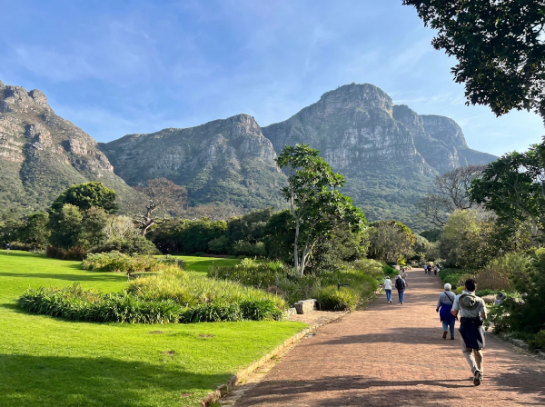
Wildlife conservation is important for biodiversity as well as tourism and local economic activity. Responsible tourism can contribute to conservation and support communities connected to protected areas.
Tourism in RSA Country
Tourism is one of the most recognizable aspects of RSA country. The combination of wildlife, landscapes, beaches, cities, culture, food, and history gives travelers many different experiences.
Cape Town is a major tourism destination because of Table Mountain, the Cape Peninsula, beaches, historic sites, and cultural attractions.
The Garden Route is another popular destination, known for coastal scenery, forests, beaches, and outdoor activities.
Wildlife tourism is also important. Visitors can explore national parks and private reserves where they may observe African wildlife in protected environments.
South Africa also offers historical tourism. Sites connected to apartheid, Indigenous heritage, colonial history, and the democratic transition help visitors understand different periods of the country’s past.
For travelers, South Africa can provide a combination of urban experiences, cultural activities, wildlife encounters, and outdoor adventures.
Famous Places to Visit in RSA Country
South Africa has many famous attractions and destinations.
Table Mountain in Cape Town is one of the country’s most recognizable natural landmarks. Its elevated position provides views across Cape Town and the surrounding coastline.
Kruger National Park is internationally known for wildlife and safari experiences.
Robben Island near Cape Town has major historical significance. It is particularly associated with South Africa’s apartheid history and Nelson Mandela’s imprisonment.
The Garden Route is known for scenic coastal landscapes, forests, beaches, and outdoor activities.
Drakensberg offers mountains, hiking opportunities, waterfalls, and dramatic scenery.
Blyde River Canyon is another major natural attraction known for its impressive geological landscapes.
These destinations demonstrate the geographical and cultural variety of South Africa.
Education and Healthcare in RSA Country
South Africa has an extensive education system that includes public and private schools, colleges, technical and vocational institutions, and universities.
The country has established universities and research institutions that contribute to higher education, scientific research, professional development, innovation, and economic growth.
Healthcare in South Africa is provided through both public and private sectors. The public healthcare system serves a large part of the population, while the private sector includes hospitals, clinics, medical specialists, and other healthcare providers.
Access to healthcare and the quality of services can vary between regions and between public and private facilities. Healthcare access remains an important national development issue.
Education and healthcare are closely connected with employment, economic opportunity, inequality, and regional development.
South Africa’s Role in Africa
RSA country has an important position within Africa because of its economic activity, infrastructure, industrial capacity, financial sector, diplomatic relationships, and regional connections.
South Africa participates in African political and economic organizations and maintains relationships with countries across the continent.
Its major cities serve as centers for business, finance, transportation, education, tourism, and diplomacy.
South Africa is also an important member of the African Union and participates in regional and international initiatives.
Its transport infrastructure and geographical position make it significant for trade with neighboring countries and international markets.
RSA Country and International Relations
South Africa maintains diplomatic and economic relationships with countries across the world.
The country participates in international organizations and international forums and plays a role in discussions concerning African development, international trade, diplomacy, peace, and global economic cooperation.
South Africa is also a member of BRICS and continues to participate in BRICS activities. In 2026, South Africa is scheduled to participate in the 18th BRICS Summit in India, reflecting its continuing role within the expanded BRICS grouping.
International relationships are important to South Africa because its economy is connected to global trade, investment, tourism, commodity markets, and international cooperation.
Why Is RSA Country Important?
RSA country is important for several reasons. It is one of the major economies in Africa and has significant mineral resources, industrial capacity, financial services, and infrastructure.
South Africa is also globally recognized for its biodiversity, national parks, wildlife, and tourism destinations.
Its political history has international importance. The transition from apartheid to democracy in 1994 remains one of the most significant political transformations in modern African history.
The country’s diverse population, languages, cultural traditions, natural resources, and geographical environments also make it an important subject for people studying Africa.
Its combination of economic activity, natural resources, political history, culture, and regional influence gives South Africa an important position within Africa and the wider international community.
Interesting Facts About RSA Country
South Africa has several characteristics that make it distinctive.
One of its most notable features is its three-capital system. Pretoria is the administrative capital, Cape Town is the legislative capital, and Bloemfontein is the judicial capital.
South Africa has 12 official languages, including South African Sign Language.
Another interesting geographical feature is that Lesotho is completely surrounded by South African territory.
South Africa has extensive coastlines associated with both the Atlantic and Indian oceans.
The country is also famous for its biodiversity, national parks, wildlife reserves, and conservation areas.
Its modern political history includes the transition from apartheid to democracy in 1994.
Major cities such as Johannesburg, Cape Town, Durban, Pretoria, and Bloemfontein have different economic, governmental, cultural, and historical roles.
RSA Country: Frequently Asked Questions
What country does RSA stand for?
RSA stands for the Republic of South Africa, the formal name of South Africa. The abbreviation is formed from the words Republic of South Africa.
Is RSA the same as South Africa?
Yes. In most contexts, RSA refers to the Republic of South Africa. South Africa is the common name of the country, while RSA is an abbreviation.
Where is RSA country located?
RSA country is located at the southern end of the African continent. South Africa has extensive coastlines along the Atlantic and Indian oceans and shares land borders with several southern African countries.
What is the capital of RSA country?
South Africa has three capitals. Pretoria is the administrative capital, Cape Town is the legislative capital, and Bloemfontein is the judicial capital.
How many provinces does South Africa have?
South Africa has nine provinces: Eastern Cape, Free State, Gauteng, KwaZulu-Natal, Limpopo, Mpumalanga, Northern Cape, North West, and Western Cape.
What currency does RSA country use?
South Africa uses the South African rand, commonly abbreviated as ZAR and represented by the symbol R.
What languages are spoken in RSA country?
South Africa has 12 official languages: English, Afrikaans, isiZulu, isiXhosa, isiNdebele, Sepedi, Sesotho, Setswana, siSwati, Tshivenda, Xitsonga, and South African Sign Language.
What is RSA country famous for?
South Africa is famous for its wildlife, national parks, diverse landscapes, beaches, mountains, major cities, cultural diversity, mineral resources, and important political history.
Is Johannesburg the capital of South Africa?
No. Johannesburg is one of South Africa’s largest and most important cities, but it is not one of the country’s three capitals. Pretoria is the administrative capital, Cape Town is the legislative capital, and Bloemfontein is the judicial capital.
Why does South Africa have three capitals?
South Africa’s three-capital arrangement divides important governmental functions between different cities. Pretoria is the administrative capital, Cape Town hosts Parliament as the legislative capital, and Bloemfontein is the judicial capital.
What is South Africa’s most famous national park?
Kruger National Park is one of South Africa’s best-known national parks. It is internationally recognized for its wildlife, biodiversity, and safari tourism.
What are the major industries in RSA country?
Major economic sectors include mining, manufacturing, finance, agriculture, tourism, transportation, telecommunications, energy, and other services.
What makes South Africa geographically unique?
South Africa has highly diverse landscapes and extensive coastlines associated with two oceans. Its environment includes mountains, plateaus, grasslands, savannas, semi-desert regions, forests, wetlands, and coastal areas.
Final Thoughts on RSA Country
RSA country, formally known as the Republic of South Africa, is a diverse and influential country at the southern end of Africa. Understanding RSA means understanding much more than an abbreviation. South Africa combines a complex history, constitutional democracy, multicultural society, diversified economy, valuable natural resources, and internationally important wildlife and tourism.
From Johannesburg’s economic activity and Cape Town’s dramatic scenery to Pretoria’s government institutions and Kruger National Park’s wildlife, different parts of South Africa offer very different experiences.
The country’s nine provinces, 12 official languages, three capitals, extensive coastline, mineral resources, and cultural diversity make it an especially interesting country to study.
For anyone searching for RSA country, the simplest answer is that RSA means Republic of South Africa. South Africa is a major country in southern Africa with significant historical, economic, cultural, environmental, and regional importance.