
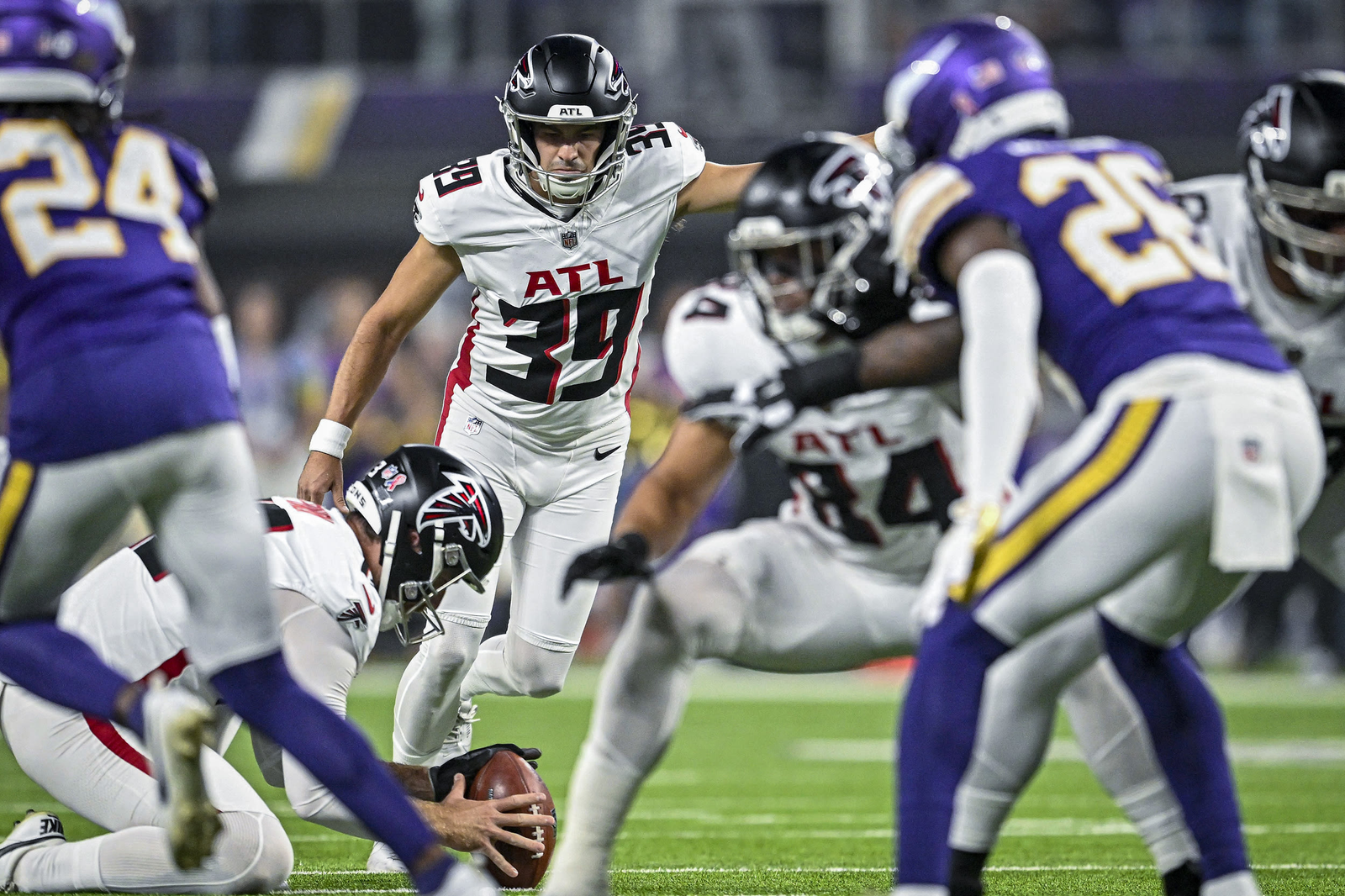
The Atlanta Falcons vs Minnesota Vikings matchup in the 2025 NFL season was more than just a regular early-season clash. It became a clear example of how defensive pressure, rushing efficiency, and turnover control can completely shape an NFL game. Played at U.S. Bank Stadium in Minneapolis, the Atlanta Falcons delivered a commanding performance and secured a 22–6 victory over the Minnesota Vikings.
What made this game particularly interesting from a statistical and analytical standpoint was the contrast in execution. Atlanta controlled the ground game, protected the football, atlanta falcons vs minnesota vikings match player stats and consistently pressured the quarterback, while Minnesota struggled with offensive rhythm, protection breakdowns, and red-zone inefficiency. The player stats from both sides reflect a game where momentum never truly shifted away from Atlanta after they established control early.
Full Game Context and NFL Season Importance
This matchup came early in the 2025 NFL season, a stage where teams are still defining identity and refining offensive systems. For the Atlanta Falcons, the game represented a step forward in establishing a balanced offensive identity built around a strong run game and conservative quarterback management. For Minnesota, it exposed structural weaknesses in pass protection and offensive consistency that would need immediate correction.
The Falcons entered the game with growing confidence in their young offensive core and a defense that had already shown signs of improvement. Minnesota, on the other hand, was still adjusting to a developing quarterback situation and attempting to build chemistry between its receiving weapons and offensive line. The 22–6 final score reflected not just one bad performance but a wider gap in execution across four quarters.
Atlanta Falcons Offensive Player Stats and Strategic Execution
The Atlanta Falcons offense in this matchup was defined by efficiency rather than volume. Quarterback Michael Penix Jr. managed the game with composure, completing 13 of 21 passes for 108 yards. While those numbers may appear modest, they reflect a deliberate offensive approach focused on minimizing risk and maximizing time of possession.
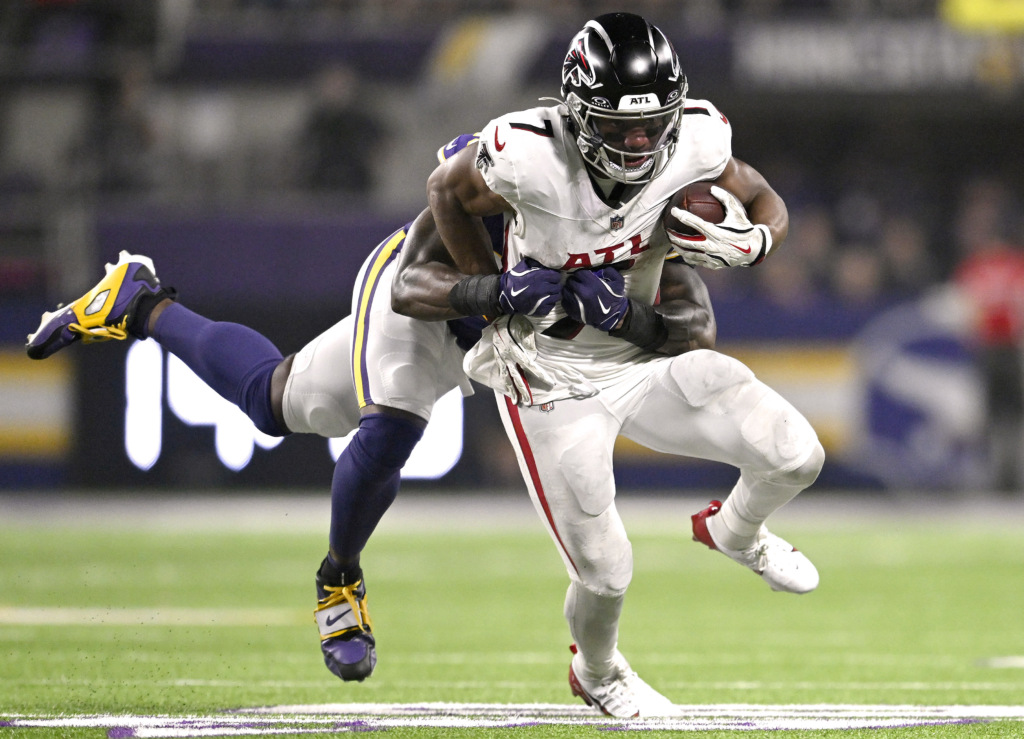
The real offensive dominance came from the ground game. Bijan Robinson delivered one of his most impactful performances of the season, rushing for 143 yards on 22 carries. His vision, balance, and ability to break tackles allowed Atlanta to consistently stay ahead of the chains. Tyler Allgeier complemented this effort with 76 rushing yards and a crucial red-zone touchdown that ultimately helped extend the lead beyond Minnesota’s reach.
Atlanta’s offensive line also deserves recognition in the statistical narrative. Their ability to create consistent running lanes and limit negative plays allowed the Falcons to dominate possession time and dictate the pace of the game from start to finish.
Minnesota Vikings Offensive Player Stats and Breakdown
The Minnesota Vikings offense struggled to establish consistency, and the player stats clearly reflect the challenges faced throughout the game. Quarterback J.J. McCarthy completed 11 of 21 passes for 158 yards but was pressured heavily throughout the contest, leading to two interceptions and multiple disrupted plays.
The Vikings’ passing game showed isolated moments of explosiveness, particularly through Justin Jefferson, who recorded a 50-yard reception that briefly shifted momentum. However, these flashes were not supported by sustained drives. The lack of protection resulted in six sacks allowed, which significantly impacted McCarthy’s timing and decision-making.
The rushing attack also failed to generate momentum, combining for just 78 total yards. Without a consistent ground game, Minnesota’s offense became predictable, allowing Atlanta falcons vs Minnesota Vikings match player stats defense to focus heavily on pass pressure and coverage containment.
Atlanta Falcons Defensive Player Stats and Pressure Dominance
Atlanta falcons vs Minnesota Vikings match player stats defensive performance was one of the defining elements of the game. The Falcons recorded six sacks, multiple quarterback hits, and two interceptions, showcasing their ability to disrupt Minnesota’s offensive rhythm at every level.Atlanta falcons vs Minnesota Vikings match player statsAtlanta’s defensive performance was one of the defining elements of the game. The Falcons recorded six sacks, multiple quarterback hits, and two interceptions, showcasing their ability to disrupt Minnesota’s offensive rhythm at every level.
The defensive line consistently won battles at the line of scrimmage, Atlanta falcons vs Minnesota Vikings match player stats collapsing the pocket and forcing hurried throws. This pressure not only led to turnovers but also prevented Minnesota from executing longer developing passing plays. The secondary benefited from this pressure, maintaining tight coverage and limiting explosive passing opportunities outside of a few isolated plays.
Beyond the raw statistics, Atlanta falcons vs Minnesota Vikings match player stats defensive discipline was evident in their ability to control third-down situations. Minnesota struggled to convert key downs, which kept drives short and allowed Atlanta’s offense more opportunities to control the game tempo.
Minnesota Vikings Defensive Player Stats and Structural Challenges
Atlanta falcons vs Minnesota Vikings match player stats defense faced a difficult assignment against Atlanta’s balanced offensive strategy. While they managed to generate three sacks and showed occasional resistance in passing situations, the overall defensive performance was undermined by their inability to stop the run.
The Falcons accumulated 218 rushing yards, Atlanta falcons vs Minnesota Vikings match player stats repeatedly breaking through both interior and edge containment. Bijan Robinson’s performance in particular exposed gaps in Minnesota’s defensive front, as missed tackles and poor gap discipline led to extended runs and sustained drives.
As the game progressed, fatigue became a visible factor. Minnesota’s defense spent extended time on the field due to offensive inefficiency, Atlanta falcons vs Minnesota Vikings match player stats and this contributed to late-game breakdowns that allowed Atlanta to seal the victory comfortably.
Quarterback Performance Analysis and Passing Efficiency
The quarterback battle in this matchup was heavily influenced by protection and game script. Michael Penix Jr. for Atlanta operated in a controlled system that prioritized short throws and safe reads. His 108 passing yards may seem low in traditional analysis, Atlanta falcons vs Minnesota Vikings match player stats but his efficiency and lack of turnovers were crucial in maintaining Atlanta’s offensive stability.
On the Minnesota side, J.J. McCarthy faced constant pressure, which disrupted his ability to settle into rhythm. The six sacks and two interceptions were not just statistical setbacks but momentum-shifting events that repeatedly stalled Minnesota’s offensive progress. His 158 passing yards reflect a mix of short completions and a few deep attempts that were either defended or poorly timed.
The contrast between the two quarterbacks highlights the importance of offensive line performance and game management in modern NFL systems.
Running Game Impact and Rushing Statistics Breakdown
The rushing game was the most decisive statistical category in the entire matchup. Atlanta’s ground attack dominated from start to finish, Atlanta falcons vs Minnesota Vikings match player stats led by Bijan Robinson’s explosive 143-yard performance. His ability to consistently gain positive yardage allowed Atlanta to control clock management and field position.
Tyler Allgeier’s contribution added another layer of complexity for Minnesota’s defense. His 76 rushing yards and touchdown ensured that Atlanta’s offense remained balanced and unpredictable in key situations. The combination of both running backs created sustained pressure on Minnesota’s defensive front.
Minnesota’s rushing attack, by contrast, Atlanta falcons vs Minnesota Vikings match player stats was unable to establish consistency. With just 78 total rushing yards, the Vikings could not support their passing game or force Atlanta’s defense to adjust its coverage schemes.
Special Teams Performance and Hidden Statistical Value
Special teams played an important role in shaping the final scoreline. Atlanta’s kicking unit was flawless, with Parker Romo converting five field goals, including a long-range attempt that extended the lead in the final quarter. These points ensured that Minnesota remained out of reach even without relying heavily on touchdowns.
Minnesota’s Will Reichard also performed reliably, converting both of his field goal attempts, including a long-distance kick that briefly kept the Vikings within reach in the first half. However, Atlanta falcons vs Minnesota Vikings match player stats the inability to convert red-zone opportunities into touchdowns significantly reduced their scoring ceiling.
Field position throughout the game consistently favored Atlanta, allowing their defense to operate with shorter fields and their offense to play conservatively without pressure to take risks.
Advanced Statistical Insights and Momentum Metrics
From an advanced statistical perspective, the game was defined by possession dominance and efficiency differentials. Atlanta controlled the majority of time of possession, Atlanta falcons vs Minnesota Vikings match player stats largely due to their rushing success and Minnesota’s inability to sustain drives. This created a compounding effect where the Vikings’ defense became increasingly fatigued as the game progressed.
Turnover differential also played a key role, with Atlanta forcing two interceptions while committing no turnovers. This +2 turnover margin is often a strong predictor of game outcomes in the NFL, and it proved decisive here as well.
Situational football further highlighted the gap between the two teams. Atlanta consistently converted manageable third-down situations, while Minnesota struggled to extend drives, particularly in the second half where they failed to score entirely.
Historical Context and Team Matchup Trends
Historically, the Atlanta Falcons and Minnesota Vikings have produced competitive matchups, often defined by defensive intensity and late-game swings. However, Atlanta falcons vs Minnesota Vikings match player stats this 2025 encounter stood out due to its one-sided statistical profile and Atlanta’s control across nearly every phase of the game.
The result also reflects a broader trend in modern NFL matchups where teams with strong rushing attacks and disciplined defenses often outperform teams relying heavily on passing volatility. Atlanta’s approach in this game mirrored successful league-wide strategies focused on balance and turnover avoidance.
For Minnesota, Atlanta falcons vs Minnesota Vikings match player stats the game added to ongoing concerns about offensive line stability and quarterback development, both of which remain central to their long-term competitive outlook.
Key Player Impact Summary and Season Implications
The standout performer of the game was clearly Bijan Robinson, whose 143 rushing yards defined Atlanta’s offensive identity in this matchup. His ability to consistently generate explosive plays without relying on passing volume made him the centerpiece of the Falcons’ strategy.
On defense, Atlanta falcons vs Minnesota Vikings match player stats pass rush unit collectively shaped the outcome through sacks, pressures, and forced turnovers. Minnesota’s top offensive weapons, including Justin Jefferson, were limited by inconsistent quarterback protection and lack of sustained drives.
The implications of this game extend beyond a single result. Atlanta demonstrated a clear blueprint for winning games through defense and rushing efficiency, while Minnesota was exposed in key structural areas that require adjustment to remain competitive in a strong NFC landscape.
Red Zone Efficiency and Scoring Breakdown Analysis
The red zone efficiency in the Atlanta falcons vs Minnesota Vikings match player stats matchup was one of the most defining statistical differences between the two teams. Atlanta showed controlled and disciplined execution when entering scoring range, relying on a mix of short-yardage runs and safe passing plays to convert opportunities into points. This approach minimized mistakes and ensured that nearly every promising drive ended in points, even when touchdowns were not always available.
Minnesota, however, struggled significantly in the red zone, which ultimately cost them any chance of staying competitive. Despite managing occasional long completions and moderate drives, the Vikings repeatedly failed to convert inside scoring territory. Drives that should have resulted in touchdowns were often stopped short due to sacks, penalties, or broken passing plays under pressure.
This contrast in efficiency reflects a broader issue in Minnesota’s offensive structure during the game. While they were able to move the ball in small bursts, they lacked the execution and protection needed to finish drives. Atlanta’s defense deserves credit here as well, Atlanta falcons vs Minnesota Vikings match player stats as their ability to tighten coverage and increase pressure near the goal line forced Minnesota into settling for field goals instead of touchdowns.
Coaching Decisions and Tactical Game Management
Coaching strategy played a major role in how the game unfolded, particularly in Atlanta’s ability to control tempo and limit risk. The Falcons’ coaching staff clearly prioritized a run-heavy game plan built around Bijan Robinson and Tyler Atlanta falcons vs Minnesota Vikings match player stats, ensuring that the offense remained balanced and unpredictable. This approach allowed Atlanta to dominate time of possession while keeping their quarterback in low-pressure situations.
Defensively, Atlanta falcons vs Minnesota Vikings match player stats coaching decisions emphasized aggressive pass rush schemes and disciplined coverage shells. The decision to consistently pressure J.J. McCarthy with varied blitz packages disrupted Minnesota’s offensive timing and forced early mistakes. These adjustments created a ripple effect throughout the game, leading to turnovers and stalled drives.
On the Minnesota side, coaching challenges became more visible as the game progressed. Adjustments to counter Atlanta’s defensive pressure were limited, and the offensive game plan struggled to evolve under pressure. Despite attempts to establish rhythm through short passes and quick reads, the lack of offensive line protection prevented meaningful consistency.
Season Impact and Future Outlook for Both Teams
The outcome of this game carries important implications for both franchises moving forward in the 2025 NFL season. For the Atlanta falcons vs Minnesota Vikings match player stats, this victory reinforces their identity as a physically dominant and defense-driven team capable of controlling games without relying heavily on passing volume. The strong performance from their rushing attack and defensive front suggests that they can remain competitive in tightly contested matchups throughout the season.
The statistical balance shown in this game also highlights Atlanta’s growing stability on both sides of the ball. If performances like this continue, the Falcons could position themselves as a strong contender within their conference, especially if their offensive efficiency in the passing game develops further alongside their already strong ground attack.
For the Atlanta falcons vs Minnesota Vikings match player stats, this game serves as a clear evaluation point for offensive development and protection issues. The high number of sacks, combined with inconsistent rushing production, highlights structural weaknesses that must be addressed quickly. While there are positive signs in individual talent—especially in the receiving corps—the lack of protection and rhythm remains a critical concern.
Moving forward, Minnesota’s ability to adapt and improve their offensive line performance will largely determine their competitiveness. Without these adjustments, Atlanta falcons vs Minnesota Vikings match player stats similar statistical breakdowns may continue against strong defensive opponents.
Conclusion: Complete Statistical Story of the Match
The Atlanta falcons vs Minnesota Vikings match player stats matchup ultimately delivered a clear statistical narrative that was shaped by control, discipline, and execution. Atlanta’s dominance in rushing yards, defensive pressure, and turnover control created a foundation that Minnesota could not overcome at any stage of the game.
From a player statistics perspective, Bijan Robinson’s 143 rushing yards stood out as the defining individual performance, supported by Tyler Allgeier’s scoring contribution and a disciplined defensive unit that consistently disrupted Minnesota’s offense. On the other side, J.J. McCarthy’s pressured performance and Justin Jefferson’s limited explosive moments highlighted Minnesota’s inconsistency under defensive stress.
In the broader view of the 2025 NFL season, this game represents a clear example of how balanced team construction wins football games. Atlanta’s ability to combine a strong run game with aggressive defense proved decisive, Atlanta falcons vs Minnesota Vikings match player stats while Minnesota’s struggles in protection and red-zone efficiency exposed key areas that require urgent improvement.
The final 22–6 scoreline was not just a reflection of scoring output, but a complete statistical story of control, execution, and situational dominance by the Atlanta Falcons.