


Early Life of Frank Sheeran and His Working-Class Foundation
Frank Sheeran, born Francis Joseph Sheeran on October 25, 1920, in Darby, Pennsylvania, came from a modest Irish-Swedish immigrant background. His early environment was shaped by economic hardship during the Great Depression, which influenced his outlook on survival, loyalty, and authority. Growing up in a working-class neighborhood near Philadelphia, he experienced a life where physical strength and resilience often mattered more than education.
As a young boy, Sheeran was not known for academic success but rather for his toughness and discipline. He attended school in Pennsylvania but left formal education early, choosing instead to take on labor-focused work. This early exposure to manual labor and industrial environments later became a key factor in his involvement with trucking and union-related jobs.
His upbringing in a tightly knit immigrant community also exposed him to strong cultural values centered on loyalty, respect, and endurance. These traits followed him throughout his life and later became central themes in discussions about his alleged involvement in organized crime networks.
Frank Sheeran and His World War II Military Service
Frank Sheeran enlisted in the United States Army in 1941, shortly after the attack on Pearl Harbor, joining millions of Americans who entered military service during World War II. He served in the Military Police Corps before being assigned to the 45th Infantry Division, which participated in some of the most intense campaigns of the European theater.
During his military service, Sheeran reportedly took part in operations across Sicily, Italy, France, and Germany. His time in combat lasted for an extended period, with some accounts suggesting he spent more than 400 days in active frontline conditions. This exposure to war placed him in situations of extreme violence and psychological stress, which many historians believe deeply affected his later behavior.
His wartime experience is often analyzed when discussing his later life because it introduced him to normalized violence and strict command structures. These conditions may have shaped his ability to operate in high-pressure environments, which later became relevant in labor disputes and alleged organized crime activity.
Transition to Civilian Life and Early Labor Work
After returning from World War II in 1945, Frank Sheeran faced the challenge of reintegrating into civilian life, like many veterans of his era. He initially worked as a truck driver, a profession that was in high demand in post-war America due to rapid industrial expansion and economic growth.
Despite steady employment opportunities, Sheeran struggled to maintain financial stability in the early years after the war. During this period, he began interacting with individuals involved in informal labor networks and local power structures in Pennsylvania. These environments often blurred the line between legitimate union work and illegal racketeering activities.
Over time, Sheeran’s connections expanded beyond ordinary labor circles. His physical presence, wartime background, and reputation for toughness made him a valuable figure in environments where intimidation and enforcement were used to settle disputes or maintain control.
Rise Within Union Circles and Exposure to Labor Politics
Frank Sheeran eventually became associated with the International Brotherhood of Teamsters, one of the most powerful labor unions in the United States during the mid-20th century. The Teamsters played a critical role in shaping American trucking and logistics industries, but the union was also frequently accused of corruption and mob influence.
Sheeran worked as a union driver and official, which gave him access to influential labor leaders and business figures. His involvement placed him at the intersection of legitimate labor advocacy and alleged criminal infiltration. During this time, he developed relationships with key individuals in both union leadership and organized crime networks.
His role within the union reportedly extended beyond standard labor duties. Accounts suggest that he became involved in enforcing internal decisions, managing disputes, and acting as a trusted intermediary between powerful figures within the union structure.
Frank Sheeran and the Bufalino Crime Family Connection
One of the most significant relationships in Frank Sheeran’s life was his alleged association with the Bufalino crime family, a powerful organized crime group based in Pennsylvania. The family was led by Russell Bufalino, a prominent Mafia boss who maintained influence over labor unions, trucking industries, and regional business operations.
Sheeran’s connection to Bufalino is central to many narratives about his life. He was considered a close associate, though never officially confirmed as a made member of the Mafia. Instead, he operated in a gray area between legitimate union activity and organized crime influence, according to various historical accounts.
This relationship allegedly positioned Sheeran as a reliable figure within criminal networks, trusted to handle sensitive tasks. However, the extent of his involvement remains debated among historians, as much of the available information comes from secondary sources and later testimonies.
Relationship with Jimmy Hoffa and Teamsters Power Struggles
Frank Sheeran is most widely known for his connection to Jimmy Hoffa, the influential president of the International Brotherhood of Teamsters. Hoffa was a dominant figure in American labor history, known for expanding union power while also facing accusations of corruption and ties to organized crime.
Sheeran reportedly became part of Hoffa’s inner circle during the height of the Teamsters’ influence in the 1960s and early 1970s. His role placed him close to key negotiations, internal disputes, and political tensions within the union. Hoffa’s leadership style relied heavily on loyalty and strong enforcement structures, which aligned with Sheeran’s reputation.
Their relationship has become one of the most discussed aspects of Sheeran’s life, especially in relation to Hoffa’s disappearance. Many theories about the case involve individuals connected to both the union and organized crime, making Sheeran a central figure in public speculation.
The Disappearance of Jimmy Hoffa and Ongoing Theories
Jimmy Hoffa disappeared on July 30, 1975, after being last seen outside the Machus Red Fox restaurant in Bloomfield Township, Michigan. His disappearance remains one of the most famous unsolved cases in American history and continues to generate widespread public interest.
Frank Sheeran’s name emerged in connection with multiple theories about Hoffa’s fate. Some accounts suggest that internal union conflicts and organized crime disputes played a role in his disappearance. However, no official evidence has ever confirmed Sheeran’s direct involvement.
Despite decades of investigation by federal authorities, Hoffa’s body has never been found. The lack of physical evidence has allowed numerous theories to persist, with Sheeran frequently mentioned due to his alleged proximity to key figures in both the union and organized crime circles.
The Confession and “I Heard You Paint Houses” Controversy
One of the most controversial aspects of Frank Sheeran’s legacy comes from the book I Heard You Paint Houses, written by Charles Brandt. In the book, Sheeran allegedly confesses to involvement in multiple murders, including the killing of Jimmy Hoffa.
The phrase “I heard you paint houses” is described as Mafia slang referring to violent killings, where blood splatters “paint” the walls. According to the narrative, Sheeran admitted to carrying out orders from powerful figures within organized crime, including actions tied to labor disputes and internal enforcement.
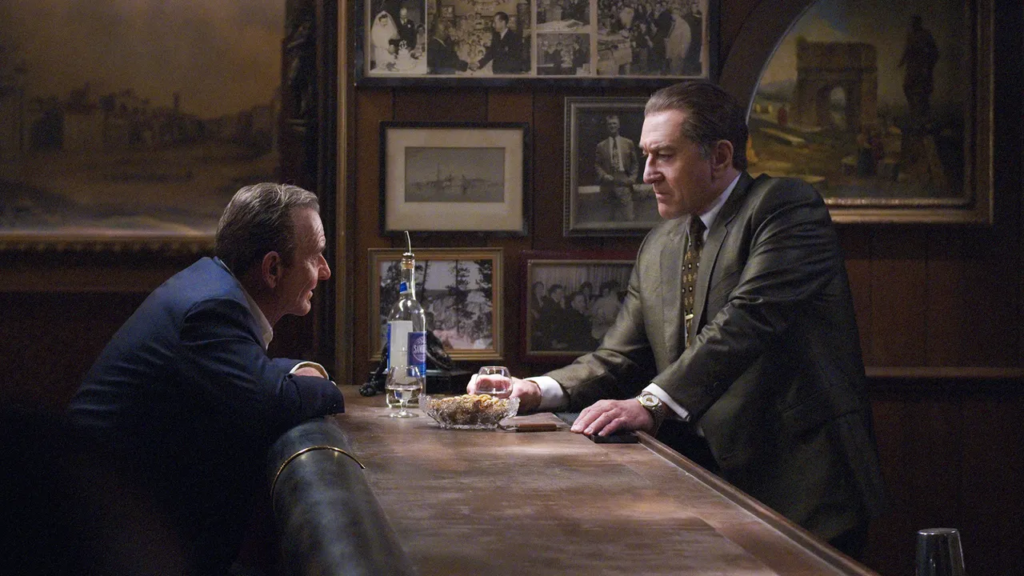
However, many historians and investigators have questioned the credibility of these claims. Critics argue that there is limited independent evidence supporting Sheeran’s alleged confessions, and some details in the book have been challenged. Despite this, the story significantly shaped public perception of Sheeran and inspired Martin Scorsese’s film The Irishman.
Legal Issues, Conviction, and Imprisonment
Frank Sheeran’s involvement in union-related corruption eventually led to legal consequences. In 1980, he was convicted on charges related to labor racketeering and union corruption. These charges were part of broader federal efforts to dismantle organized crime influence within American labor unions.
He was sentenced to 32 years in prison but served approximately 13 years before being released due to health concerns and aging. His imprisonment reflected the government’s intensified focus on union reform and criminal prosecution during the late 20th century.
While incarcerated, Sheeran’s reputation continued to grow in public discourse, with debates emerging over whether he was a major criminal figure or a peripheral participant in larger systemic corruption.
Later Life, Death, and Historical Legacy
After his release from prison, Frank Sheeran spent his final years in Pennsylvania, living in relative isolation and declining health. He suffered from cancer and other age-related conditions, which eventually led to his death on December 14, 2003, at the age of 83.
He was buried in Holy Cross Cemetery in Yeadon, Pennsylvania. His death marked the end of a life that had become deeply embedded in American discussions of labor history, organized crime, and political controversy.
Today, Sheeran remains a symbolic figure whose life continues to be debated by historians, journalists, and filmmakers. His story sits at the intersection of fact, allegation, and cultural mythmaking.
Conclusion and Legacy of Frank Sheeran
Frank Sheeran life represents one of the most complex and controversial narratives in modern American history. From his humble beginnings in Pennsylvania to his military service in World War II, and later his involvement in union politics, his journey reflects the turbulent changes in mid-20th-century America.
His alleged connections to Jimmy Hoffa, the Teamsters Union, and the Bufalino crime family have made him a central figure in discussions about organized crime and labor corruption. However, much of his story remains contested, relying on memoir-style accounts and debated confessions rather than fully verified historical records.
Ultimately, Frank Sheeran’s legacy is shaped by both documented history and unresolved mystery. Whether viewed as a criminal enforcer, a union participant caught in larger systems, or a figure whose story became mythologized over time, he continues to fascinate audiences worldwide.