

The History Behind House on the Rock
House on the Rock is one of the most fascinating tourist attractions in the United States. Located in Spring Green, Wisconsin, this extraordinary destination was created by Alex Jordan Jr., a visionary builder who transformed a rocky landscape into a massive architectural masterpiece filled with imagination, mystery, and artistic ambition. Construction on the original house began during the 1940s, and over the following decades, the project expanded into a sprawling entertainment complex unlike anything else in America. Today, House on the Rock attracts visitors from around the world who come to experience its unusual design, enormous collections, and surreal atmosphere.
The attraction sits atop Deer Shelter Rock, a towering sandstone formation that overlooks the scenic Wisconsin countryside. Alex Jordan Jr. wanted to create a structure that blended naturally with the environment while also feeling magical and otherworldly. Instead of following traditional architectural rules, he allowed the project to evolve freely over time. Every new room, hallway, and exhibit reflected his imagination and curiosity. This unconventional creative process helped House on the Rock become a symbol of outsider architecture and visionary design. The attraction eventually gained national recognition for its strange beauty, mysterious mood, and overwhelming scale.
Over the years, House on the Rock developed a reputation as one of the strangest roadside attractions in the country. Travelers often describe it as part museum, part fantasy world, and part architectural experiment. Unlike conventional museums that organize exhibits by historical periods or themes, House on the Rock focuses on emotional impact and visual storytelling. Visitors move through dark hallways, dramatic galleries, and endless displays that feel more like scenes from a dream than a typical tourist attraction. This unique identity has kept the destination popular for generations.
The Extraordinary Architecture of the Original House
The original house remains one of the most impressive parts of the attraction. Built directly into the natural sandstone rock formation, the structure appears to emerge organically from the landscape itself. Large windows overlook forests and valleys, while narrow corridors and low ceilings create an intimate atmosphere. Japanese-inspired design elements can be seen throughout the house, including wooden interiors, hanging lanterns, and peaceful seating areas that encourage quiet reflection.
One of the most famous architectural features is the Infinity Room, a breathtaking glass-enclosed corridor that extends more than 200 feet into open space. Supported without visible beams beneath it, the room creates the illusion of floating high above the valley floor. Visitors walking through the Infinity Room often experience both excitement and fear because of the dramatic height and panoramic views. The design demonstrates Alex Jordan Jr.’s talent for combining engineering, visual illusion, and emotional storytelling into a single unforgettable experience.
The architecture of House on the Rock differs greatly from modern museums and historic mansions because it embraces unpredictability. Rooms expand suddenly into enormous halls filled with elaborate displays, while twisting pathways lead visitors through hidden spaces and unexpected corners. Lighting also plays an important role in the experience. Dim corridors contrast with brightly illuminated galleries, creating a sense of mystery and discovery. Every detail inside the house was carefully designed to shape visitors’ emotions and curiosity.
The Massive Collections Inside House on the Rock
One of the main reasons House on the Rock became world famous is its enormous collection of objects and exhibits. The attraction contains thousands of antiques, sculptures, historical artifacts, mechanical machines, and decorative pieces gathered over several decades. These collections are displayed in dramatic ways that transform ordinary objects into immersive artistic experiences. Visitors often feel overwhelmed by the sheer number of items packed into every room and hallway.
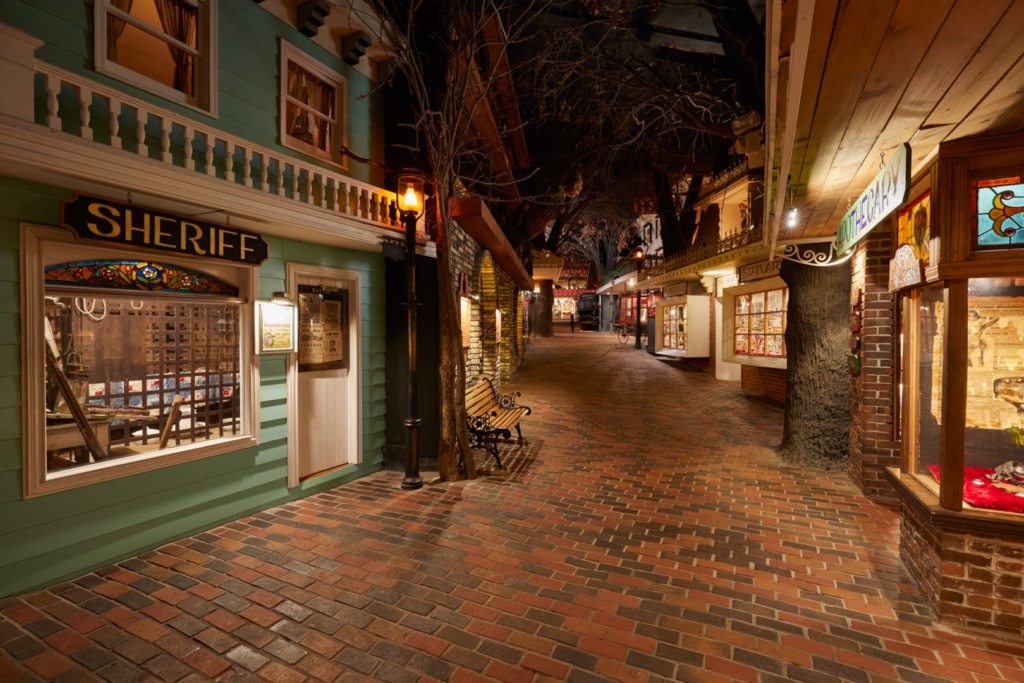
The exhibits cover a wide variety of themes, including maritime history, old-fashioned streetscapes, circus memorabilia, dolls, armor, weapons, and fantasy scenes. Large whale sculptures hang from ceilings, while miniature villages stretch across entire rooms with astonishing detail. The attraction does not follow the rules of a traditional museum because the goal is not simply education. Instead, the collections are arranged to create wonder, surprise, and emotional reactions. This unusual presentation style makes House on the Rock feel more like an enormous theatrical production than a historical exhibition.
Many visitors spend hours exploring the different exhibit sections because there is always something new to notice. Hidden details, moving displays, and unusual decorations appear everywhere throughout the attraction. Some areas feel nostalgic and comforting, while others feel eerie and mysterious. This contrast between beauty and unease has become one of the defining characteristics of House on the Rock. The attraction encourages guests to slow down and absorb the overwhelming amount of visual information surrounding them.
The Famous Carousel and Music Machine Collection
Among all the exhibits inside House on the Rock, the carousel room is perhaps the most iconic. This gigantic carousel is filled with hundreds of handcrafted animals, thousands of lights, and elaborate decorations covering every inch of the room. Unlike traditional amusement park carousels, however, this one was never designed for riders. Instead, it serves as a massive artistic centerpiece intended to amaze visitors through movement, color, and scale.
The carousel contains an incredible variety of animals including lions, giraffes, mythical creatures, and exotic birds. Decorative angels hang from above, while orchestral music fills the room with energy and nostalgia. When the carousel operates, flashing lights and spinning movement create an almost hypnotic atmosphere. Many visitors describe the experience as magical, surreal, and slightly overwhelming at the same time. The room perfectly represents Alex Jordan Jr.’s love for theatrical spectacle and sensory immersion.
Another important part of the attraction is the extensive collection of automated music machines. These include orchestrions, self-playing violins, antique pianos, calliopes, and mechanical orchestras from different periods of American history. Many of these machines continue to function today, producing haunting melodies that echo through the dark corridors of the attraction. The sounds contribute greatly to the emotional atmosphere inside House on the Rock. The combination of old mechanical music, dim lighting, and crowded displays creates an unforgettable sensory experience unlike any other tourist destination in America.
The Surreal Atmosphere and Visitor Experience
Visiting House on the Rock is often described as a dreamlike journey through imagination and fantasy. The attraction’s maze-like layout forces visitors to move slowly through twisting hallways, narrow staircases, and massive exhibit halls. Because there are very few windows in many sections, guests can easily lose track of time while exploring the endless displays. This disorienting effect adds to the mysterious feeling that defines the attraction.
The atmosphere inside House on the Rock changes constantly from room to room. Some spaces are peaceful and elegant, while others are chaotic and visually intense. Dark lighting, dramatic sound effects, and oversized displays create emotional reactions ranging from wonder to discomfort. Many visitors online describe the attraction as “liminal,” meaning it feels disconnected from normal reality. This unusual emotional quality is one reason the destination continues to fascinate travelers, photographers, and architecture enthusiasts.
A complete visit can take several hours because of the attraction’s enormous size. Comfortable shoes are highly recommended due to the long walking distances and multiple staircases throughout the property. During busy travel seasons, visitors often spend an entire day exploring the exhibits and surrounding grounds. Despite the physical demands of the experience, many people consider House on the Rock one of the most unforgettable attractions they have ever visited because of its originality and emotional impact.
The Connection to Frank Lloyd Wright
One of the most famous stories associated with House on the Rock involves legendary architect Frank Lloyd Wright. Wright’s Taliesin estate is located near Spring Green, and local legends claim Alex Jordan Jr. admired Wright’s work before beginning construction on House on the Rock. According to popular stories, Jordan once visited Taliesin and was rejected by Wright, inspiring him to create his own architectural masterpiece nearby. Historians debate whether this story is completely accurate, but it has become part of the attraction’s mythology.
Certain architectural elements in the original house show influences that resemble Wright’s philosophy of organic architecture. Large windows connect interior spaces with nature, while the structure itself blends closely with the surrounding landscape. However, House on the Rock eventually evolved into something dramatically different from Wright’s minimalist style. Where Wright focused on harmony, balance, and simplicity, Alex Jordan Jr. embraced theatrical excess, overwhelming collections, and fantasy-inspired design.
This contrast between the two architectural visions makes the Spring Green area especially interesting for travelers interested in architecture and design history. Visitors often explore both Taliesin and House on the Rock during the same trip because the attractions represent completely different interpretations of creativity and artistic expression. Together, they showcase two unique approaches to American architecture during the twentieth century.
House on the Rock in Popular Culture
House on the Rock gained even greater recognition after appearing in books, television programs, documentaries, and online discussions. One of the most important cultural references came from author Neil Gaiman, who featured the attraction prominently in his novel American Gods. In the story, House on the Rock becomes a mystical gathering place filled with supernatural symbolism and hidden power. This portrayal introduced the attraction to an entirely new generation of readers and fantasy fans.
The unique visual style of House on the Rock also makes it popular among photographers, filmmakers, and artists. The combination of dim lighting, antique decorations, surreal sculptures, and endless corridors creates a setting that feels cinematic and mysterious. Many visitors share photographs and videos online, helping the attraction maintain its reputation as one of America’s strangest and most visually fascinating tourist destinations.
Social media has further increased interest in House on the Rock over recent years. Viral videos and travel blogs often describe the attraction as bizarre, beautiful, unsettling, and unforgettable all at once. Some travelers are drawn by curiosity, while others visit specifically because they enjoy unusual architecture, vintage Americana, or immersive artistic environments. The attraction’s ability to inspire strong emotional reactions continues to strengthen its cultural significance.
Seasonal Events and Tourism in Spring Green
House on the Rock attracts large numbers of tourists throughout the year, especially during spring, summer, and fall travel seasons. The surrounding region of Spring Green offers scenic landscapes, hiking opportunities, cultural attractions, and charming small-town experiences that complement the attraction itself. Many visitors choose to spend an entire weekend in the area exploring local restaurants, resorts, and historic sites.
Seasonal decorations and special events also help keep the attraction fresh for returning guests. During the holiday season, sections of House on the Rock are transformed with festive lighting, winter decorations, and themed displays. These seasonal additions create a different atmosphere compared to regular tours and encourage repeat visits from travelers who want to experience the attraction in new ways.
The Wisconsin countryside surrounding House on the Rock provides a peaceful contrast to the overwhelming sensory experience inside the building. Rolling hills, forests, and quiet rural roads make the area popular for road trips and scenic vacations. Many visitors appreciate the balance between natural beauty outdoors and imaginative chaos inside the attraction. This combination contributes greatly to the destination’s lasting appeal.
Why House on the Rock Remains So Popular
Decades after its opening, House on the Rock continues to attract visitors because there is truly nothing else like it in the world. Its unusual combination of architecture, fantasy, art, history, and spectacle creates a deeply memorable experience that cannot easily be compared to traditional museums or amusement parks. Every room reveals something unexpected, keeping visitors curious and emotionally engaged from beginning to end.
Another reason for the attraction’s popularity is its ability to create personal interpretations. Some people view House on the Rock as a masterpiece of creativity and imagination, while others see it as strange, chaotic, or even unsettling. These different emotional responses make the experience more meaningful because visitors often continue thinking about the attraction long after leaving. Very few tourist destinations inspire such strong and lasting reactions.
The attraction also represents an important example of individual artistic vision. Alex Jordan Jr. created House on the Rock according to his own imagination without worrying about traditional rules or expectations. This creative freedom allowed the project to become completely unique. Visitors today are not simply touring a building or museum; they are stepping inside the mind of its creator and experiencing a world shaped entirely by imagination, obsession, and artistic ambition.
The Lasting Legacy of House on the Rock
House on the Rock has become one of the most legendary roadside attractions in American history. Its extraordinary architecture, massive collections, surreal atmosphere, and emotional intensity continue to captivate millions of visitors from around the world. The attraction stands as proof that creativity does not always need to follow conventional standards in order to become culturally significant and deeply influential.
The legacy of House on the Rock extends far beyond tourism. It has become an important symbol of outsider art, visionary architecture, and imaginative storytelling. Scholars, artists, photographers, and travelers continue studying and discussing the attraction because it challenges traditional ideas about design, museums, and entertainment. Its mixture of fantasy and reality creates an experience that feels timeless and unforgettable.
Even after decades of operation, House on the Rock still surprises first-time visitors with its scale and originality. Every hallway, exhibit, and hidden corner reflects the ambition of a creator determined to build something unlike anything else on Earth. Whether visitors see it as beautiful, bizarre, magical, or overwhelming, House on the Rock remains one of the most extraordinary destinations in the United States and a true icon of American imagination
Conclusion
House on the Rock stands as one of the most unusual and unforgettable attractions in the United States, blending architecture, imagination, and storytelling into a single immersive experience. From its dramatic location on a sandstone cliff in Wisconsin to its endlessly expanding rooms filled with rare collections, the attraction reflects the bold vision of Alex Jordan Jr. and his desire to create something completely outside traditional design rules. Every hallway, exhibit, and themed space contributes to a journey that feels more like stepping into a surreal world than visiting a museum.
What makes House on the Rock truly remarkable is not just its size or its collections, but the emotional response it creates in visitors. Some see it as a masterpiece of creativity, while others experience it as overwhelming or mysterious. This mix of reactions is exactly what keeps the attraction relevant decades after its creation. It continues to inspire curiosity, discussion, and repeated visits from travelers across the globe.
Ultimately, House on the Rock is more than a tourist destination—it is a symbol of unlimited imagination in architecture. It reminds us that creativity has no fixed boundaries and that the most memorable places are often those that challenge our expectations. Whether viewed as artistic genius or eccentric experimentation, it remains one of the most distinctive landmarks in American travel history.