
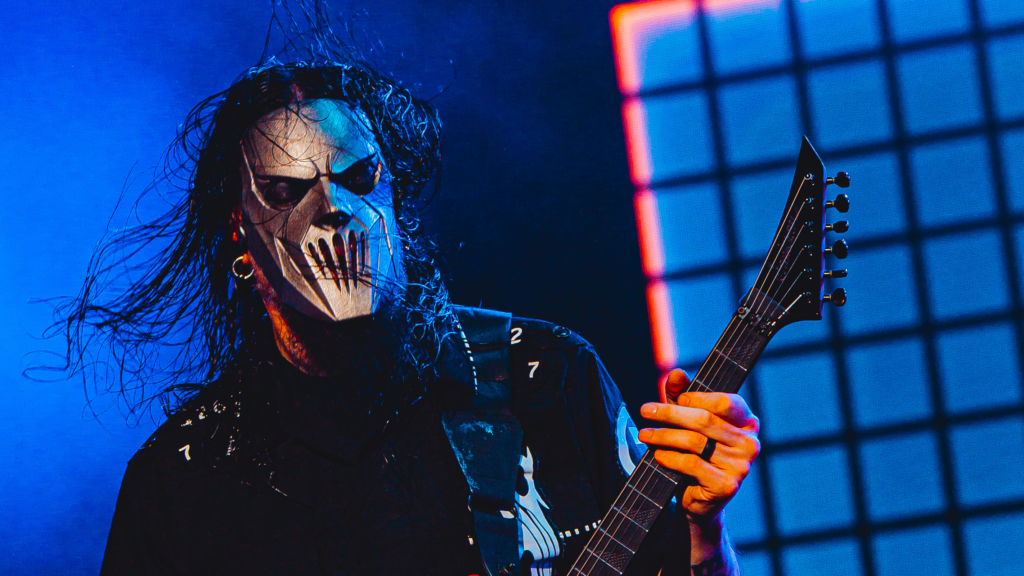

Mick Thomson is widely recognized as one of the most influential rhythm guitarists in modern heavy metal. Best known as a longtime member of Slipknot, Thomson has spent decades helping define the band’s aggressive sound through crushing riffs, technical precision, and a relentless dedication to heavy music. While many musicians in the metal world are known for flashy solos or outspoken personalities, Mike thomson has built his reputation through consistency, discipline, and exceptional musicianship.
As Slipknot’s guitarist known by the number seven, Mick Thomson has become an iconic figure in the global metal community. His intimidating stage appearance, signature mask, and powerful guitar tone have made him instantly recognizable to millions of fans worldwide. Despite his fame, he remains one of the most private members of the band, allowing his music and performances to speak louder than words. Over the years, his contributions have helped Slipknot evolve from an underground Iowa metal act into one of the most successful heavy metal bands of the modern era.
Early Life and Introduction to Music
Mickael Gordon Thomson was born on November 3, 1973, in Des Moines, Iowa, United States. Growing up in a working-class environment, he developed an interest in music at a young age. Like many future metal musicians, Thomson was fascinated by the power and energy of heavy guitar-driven music. During his teenage years, he spent countless hours listening to influential rock and metal bands while studying guitar techniques and developing his own musical identity.
His early influences came from various genres within rock and metal. Bands such as Black Sabbath, Metallica, Slayer, Death, and Morbid Angel played an important role in shaping his understanding of heavy music. While many listeners associate him solely with extreme metal, Thomson has often demonstrated appreciation for classic rock and other musical styles, allowing him to develop a broader perspective as a guitarist and songwriter.
Learning guitar required tremendous dedication. Thomson devoted years to practicing scales, rhythm exercises, alternate picking techniques, and advanced metal playing styles. His focus on rhythm guitar rather than lead guitar would eventually become one of his greatest strengths. This commitment helped him develop the precise, aggressive playing style that later became a defining element of Slipknot’s sound.
Before Slipknot: Local Bands and Musical Development
Before joining Slipknot, Mick Thomson participated in several local music projects around Iowa. The regional metal scene during the early 1990s provided opportunities for aspiring musicians to gain performance experience and refine their skills. Thomson quickly established a reputation as a technically skilled guitarist capable of handling complex and demanding material.
One of his most notable early bands was Body Pit, a death metal group that included several musicians who would later become associated with Slipknot. The experience gained in Body Pit helped Thomson strengthen his songwriting abilities and exposed him to the collaborative process of creating original music. These formative years played a critical role in preparing him for the challenges of a professional career.
The underground metal environment also allowed Thomson to experiment with different styles and techniques. He learned how to perform live, work within a band setting, and create heavy riffs that connected with audiences. These experiences would become invaluable once he joined a larger project with national and international ambitions.
Joining Slipknot and the Rise to Fame
The most significant turning point in Mick Thomson’s career came when he joined Slipknot in the mid-1990s. At the time, the band was still developing its identity and searching for musicians capable of delivering the intensity they envisioned. Thomson’s technical ability and heavy playing style made him a natural fit for the group.
His arrival strengthened Slipknot’s guitar section and helped establish the sonic foundation that would later make the band famous. Alongside fellow guitarist Jim Root, Thomson created a dual-guitar approach that blended brutality, groove, speed, and technical precision. This combination became one of the band’s most recognizable characteristics.
When Slipknot released its self-titled debut album in 1999, the music industry took notice. The record showcased a unique fusion of alternative metal, nu-metal, groove metal, and extreme metal influences. Thomson’s crushing riffs and aggressive rhythm work contributed significantly to the album’s success. Songs from the album introduced audiences around the world to Slipknot’s chaotic yet carefully constructed sound.
The success of the debut album transformed the band into an international phenomenon. Extensive touring, festival appearances, and growing fan support elevated Slipknot into one of the most talked-about metal acts of the era. For Thomson, it marked the beginning of a career that would span decades and influence countless musicians.
Guitar Style and Technical Approach
Mick Thomson is often praised for his exceptional rhythm guitar playing. Unlike many guitarists who focus primarily on solos, Thomson has built his reputation through creating powerful riffs and maintaining incredible precision. His playing demonstrates that rhythm guitar can be just as challenging and influential as lead guitar work.
One of the defining characteristics of his style is aggressive down-picking. This technique requires significant endurance and control, particularly during long performances. Thomson’s ability to maintain accuracy while playing fast, heavy riffs has earned respect from guitarists across the metal community.
His style incorporates elements of death metal, thrash metal, groove metal, and traditional heavy metal. These influences combine to create a sound that is both technically demanding and emotionally impactful. Rather than emphasizing complexity for its own sake, Thomson focuses on creating riffs that serve the song while delivering maximum intensity.
His guitar work often features tight synchronization with the drums and bass, creating the dense sonic wall that defines much of Slipknot’s music. This attention to rhythmic precision has become one of the reasons many musicians consider him among the greatest rhythm guitarists of his generation.
Contributions to Slipknot’s Most Important Albums
Throughout his career, Mick Thomson has contributed to every major Slipknot studio album. His guitar work can be heard on landmark releases including “Slipknot,” “Iowa,” “Vol. 3: The Subliminal Verses,” “All Hope Is Gone,” “.5: The Gray Chapter,” “We Are Not Your Kind,” and “The End, So Far.”
Among these albums, “Iowa” remains particularly significant. Released in 2001, it is widely regarded as one of the heaviest albums in mainstream metal history. Thomson’s guitar performances on tracks from this album demonstrate his ability to combine technical skill with extreme aggression. Many fans and critics continue to view it as one of Slipknot’s defining achievements.
As the band evolved, Thomson adapted his playing style to support increasingly diverse songwriting approaches. Albums such as “Vol. 3: The Subliminal Verses” introduced more melody and experimentation, while later releases incorporated atmospheric textures and broader musical influences. Despite these changes, his guitar work consistently maintained the heaviness that fans expected.
His songwriting contributions have also played a role in shaping the band’s creative direction. Beyond performing riffs, Thomson has participated in the development of arrangements and musical ideas that have helped Slipknot remain relevant across multiple decades.
Signature Guitars, Equipment, and Tone
A major part of Mick Thomson’s identity as a guitarist is his distinctive guitar tone. Fans frequently attempt to replicate his sound, which combines clarity, aggression, and immense power. Achieving this tone requires a combination of technique, equipment, amplification, and careful attention to detail.
For many years, Thomson was closely associated with Ibanez guitars. The company produced several signature models designed specifically around his preferences. These guitars featured powerful pickups, durable construction, and specifications tailored to modern metal performance. The instruments became popular among players seeking heavy tones and professional-level reliability.
Later, Thomson partnered with Jackson Guitars, introducing new signature models that reflected his evolving needs as a musician. These guitars incorporated advanced features while maintaining the aggressive characteristics that fans expected from his equipment. His collaboration with major manufacturers highlights his influence within the guitar industry.
In addition to guitars, Thomson has utilized various amplifiers, effects, and recording technologies throughout his career. His approach focuses on producing a thick, articulate tone capable of cutting through Slipknot’s dense arrangements. The result is a sound that remains instantly recognizable to metal fans around the world.
The Evolution of His Slipknot Masks
Slipknot’s visual presentation has always been an essential part of the band’s identity, and Mick Thomson’s mask has become one of the group’s most iconic symbols. Since the band’s early days, his mask designs have reflected both his personality and the darker aesthetic that defines Slipknot.
While some members have dramatically changed their appearances over time, Thomson’s masks have generally maintained a consistent concept. His designs often emphasize intimidation, aggression, and anonymity, helping reinforce the mysterious image that surrounds him. Fans frequently discuss the symbolism and evolution of his masks, making them an important aspect of his public identity.
The mask serves a purpose beyond visual impact. Slipknot has often described masks as a way to focus attention on the music rather than individual personalities. For Thomson, this philosophy aligns perfectly with his naturally private character and preference for letting his work speak for itself.
Over the years, each new mask variation has generated significant interest among fans. The designs have become closely associated with different eras of Slipknot’s history, serving as visual markers of the band’s artistic evolution.
Personal Life and Private Nature
Unlike many successful musicians, Mick Thomson has consistently maintained a low-profile personal life. He rarely participates in celebrity culture and generally avoids unnecessary media attention. This reserved approach has made him one of the most mysterious figures in modern metal.
Thomson married Stacy Riley in 2012, but he has chosen to keep much of his personal life away from public scrutiny. This decision has earned respect from fans who appreciate his focus on music rather than publicity. While social media and constant public exposure have become common among celebrities, Thomson has largely resisted these trends.
Interviews with Thomson often reveal a thoughtful and intelligent individual who values authenticity. He is known for speaking honestly about music, creativity, and the realities of life as a professional musician. These qualities have strengthened his reputation as a genuine artist dedicated to his craft.
His preference for privacy has also contributed to the mystique surrounding his image. Fans often find his reserved personality refreshing in an industry that frequently rewards attention-seeking behavior.
Challenges, Longevity, and Continued Success
Maintaining a successful career in heavy metal for more than two decades requires resilience, adaptability, and discipline. Mick Thomson has demonstrated all of these qualities throughout his time with Slipknot. The band has experienced lineup changes, personal losses, creative challenges, and industry shifts, yet Thomson has remained a steady presence.
One notable challenge occurred in 2015 when he suffered injuries during a highly publicized incident involving a family dispute. Despite the physical and emotional difficulties associated with the event, Thomson recovered and returned to performing with Slipknot. His ability to overcome adversity further reinforced his reputation for toughness and determination.
As the music industry has changed, Thomson has continued evolving alongside it. Advances in recording technology, changing audience expectations, and shifting musical trends have all influenced the modern metal landscape. Through these developments, he has remained committed to producing high-quality music and delivering powerful live performances.
His longevity is especially impressive given the physical demands of heavy metal performance. Years of touring, recording, and maintaining technical excellence require extraordinary dedication. Thomson’s continued success reflects his unwavering commitment to both his band and his craft.
Influence on Heavy Metal and Future Legacy

Mick Thomson’s impact extends far beyond Slipknot’s commercial achievements. He has inspired a generation of metal guitarists who admire his technical skill, riff-writing ability, and disciplined approach to musicianship. Many younger players study his techniques to better understand the art of rhythm guitar.
His influence can be heard across modern metal, particularly among bands that emphasize heavy grooves, precise rhythms, and aggressive guitar tones. Numerous musicians cite Thomson as an important inspiration, highlighting his ability to create memorable riffs while maintaining exceptional technical standards.
Within the broader history of heavy metal, Thomson occupies a unique position. He helped bridge the gap between traditional metal influences and modern extreme music, contributing to a sound that appealed to both mainstream audiences and dedicated metal fans. This achievement has ensured his lasting relevance within the genre.
As Slipknot continues creating music and performing worldwide, Thomson’s legacy continues to grow. His dedication to excellence, refusal to compromise his artistic vision, and commitment to heavy music have secured his place among the most respected guitarists of his era.
Conclusion
Mick Thomson stands as one of the defining guitarists of modern heavy metal. From his early days in Iowa’s underground metal scene to becoming a cornerstone of Slipknot’s global success, his career reflects talent, discipline, and unwavering dedication to music. His powerful riffs, distinctive guitar tone, technical precision, and commanding stage presence have helped shape the identity of one of the most influential metal bands in history.
While he remains one of the most private figures in the music industry, his impact is impossible to overlook. Through decades of recording, touring, and songwriting, Thomson has earned the respect of fans, critics, and fellow musicians alike. As Slipknot continues its journey and new generations discover heavy metal, Mick Thomson’s influence will remain an enduring force, ensuring his legacy as one of the greatest rhythm guitarists the genre has ever produced.