

Introduction to Nine Bodies in a Mexican Morgue and Its Core Mystery
Nine Bodies in a Mexican Morgue is a British mystery thriller television series created by Anthony Horowitz that stands out for its unusual structure, tense storytelling, and layered psychological depth. At first glance, it appears to be a survival drama about a plane crash in the Mexican jungle, but it quickly evolves into a complex murder mystery where every character becomes a possible suspect.
The premise begins with a small aircraft crashing deep in an isolated jungle region of Mexico, cutting the passengers off from civilization. What initially looks like a straightforward survival story slowly transforms into something darker when deaths begin to occur under suspicious circumstances. The title itself becomes meaningful as the story moves between the jungle and a morgue where nine bodies are eventually examined, raising questions about identity, timing, and cause of death.
The series uses this setup to explore human behavior under extreme stress. It blends survival instincts with psychological tension and mystery storytelling, making it both emotionally intense and intellectually engaging. The central question is not only who died, but how and why everything unfolded the way it did.
Plane Crash in the Mexican Jungle and the Survival Setup
The story begins with a sudden and catastrophic plane crash in a remote part of the Mexican jungle, immediately placing the survivors in a hostile environment. With no communication, limited supplies, and injuries ranging from minor to severe, the group is forced into survival mode. The jungle itself becomes an overwhelming force, filled with heat, wildlife dangers, and disorientation.
As the survivors gather what little remains of the wreckage, they quickly realize that survival depends entirely on cooperation. However, trust is fragile from the beginning. The passengers are strangers to one another, and their backgrounds remain unclear. This uncertainty creates early tension, as even basic decisions like finding water or shelter are influenced by suspicion.
Over time, survival becomes more complicated as the psychological strain increases. Hunger, fear, and exhaustion begin to affect judgment. Small disagreements escalate quickly, and the natural environment adds constant pressure. The jungle is not just a physical obstacle but a psychological one, slowly breaking down the group’s ability to function as a team.
Discovery of the Nine Bodies and the Morgue Mystery
The turning point of the narrative comes when bodies connected to the crash are eventually recovered and taken to a morgue for examination. The fact that there are exactly nine bodies becomes a central mystery, especially as inconsistencies appear in survivor accounts and official records.
The morgue setting introduces a second layer of storytelling that contrasts sharply with the jungle scenes. While the jungle represents chaos and survival, the morgue represents analysis, order, and investigation. This duality allows the story to move between emotional chaos and clinical reconstruction of events, giving viewers multiple perspectives on the same tragedy.
As investigators examine the bodies, they begin uncovering clues that suggest the deaths did not occur in a simple or linear way. Some injuries do not match expected patterns from the crash, leading to questions about whether some victims died later under different circumstances. This discovery deepens the mystery and raises the possibility that something more than an accident occurred.
Nonlinear Storytelling and Dual Timeline Structure
One of the most important narrative techniques in Nine Bodies in a Mexican Morgue is its nonlinear storytelling. The series constantly shifts between the present-day investigation in the morgue and flashbacks to the jungle survival timeline. This fragmented structure mirrors the confusion experienced by both survivors and investigators.
The use of dual timelines allows the series to reveal information gradually rather than all at once. Viewers are often shown outcomes before they understand causes, creating a sense of suspense and curiosity. Each new scene recontextualizes earlier events, forcing the audience to reconsider assumptions about what is true and what is misleading.
This storytelling approach also enhances emotional engagement. By jumping between moments of survival and post-event analysis, the series highlights the gap between experience and interpretation. It suggests that truth is not always immediate or obvious, especially in situations involving trauma and fear.
Characters, Secrets, and Hidden Motivations
The characters in the series are designed to reflect a wide range of human behavior under pressure. Each survivor has a distinct personality, background, and set of secrets that are slowly revealed as the story progresses. This creates a dynamic where no character can be fully trusted at any point.
As the situation becomes more desperate, hidden motivations begin to surface. Some characters act out of self-preservation, while others appear to have deeper emotional or psychological reasons for their behavior. The shifting perception of each character is one of the key drivers of tension throughout the series.
Relationships within the group are constantly changing. Alliances form based on necessity rather than trust, and these alliances break down quickly when new information is revealed. The story uses these evolving dynamics to explore how fragile human connections can become in life-or-death situations.
The Role of Investigation and the Search for the Killer
As more deaths occur, the narrative shifts into a structured investigation. The survivors themselves begin questioning what is happening, while external authorities attempt to reconstruct events based on limited evidence. The morgue becomes a central location where physical evidence is analyzed and compared with survivor testimonies.
However, the investigation is far from straightforward. The jungle environment has destroyed or obscured many clues, and emotional trauma affects the reliability of witness accounts. This creates a situation where truth must be reconstructed from fragments rather than directly observed.
As suspicion grows, nearly every character becomes a potential suspect. The lack of clear evidence forces both investigators and viewers to rely on behavioral patterns, inconsistencies in stories, and subtle clues. This uncertainty is what drives the mystery forward and keeps the tension high throughout the series.
Themes of Isolation, Trust, and Psychological Breakdown
Beyond its mystery structure, Nine Bodies in a Mexican Morgue explores deeper psychological themes. Isolation plays a major role, as the survivors are completely cut off from civilization. This separation intensifies emotional reactions and removes any external support systems that might normally stabilize behavior.
Trust becomes increasingly unstable as the story progresses. In a survival situation where information is limited, even small doubts can grow into full suspicion. The series shows how quickly trust can collapse when people are forced to make decisions under pressure without reliable evidence.
Psychological breakdown is another central theme. Characters experience fear, guilt, and paranoia, which distort their perception of events. The series uses this to highlight how human judgment can become unreliable in extreme conditions, making it difficult to distinguish reality from assumption.
Production Background and Creative Vision of Anthony Horowitz
The series was created by Anthony Horowitz, a writer known for complex mystery narratives and carefully structured plots. His storytelling style often involves multiple suspects, layered timelines, and gradual reveals, all of which are strongly present in this series.
The production was designed to emphasize realism and tension. The jungle environment was recreated to feel both beautiful and threatening, reinforcing the sense of isolation. Attention to environmental detail helps ground the story, making the survival elements feel authentic rather than exaggerated.
The series was developed with a focus on psychological depth as much as mystery plotting. Rather than relying on simple plot twists, the narrative builds tension through character behavior, emotional instability, and gradual revelation of hidden truths. This makes the storytelling more immersive and layered.
Reception, Genre Influence, and Why the Story Stands Out
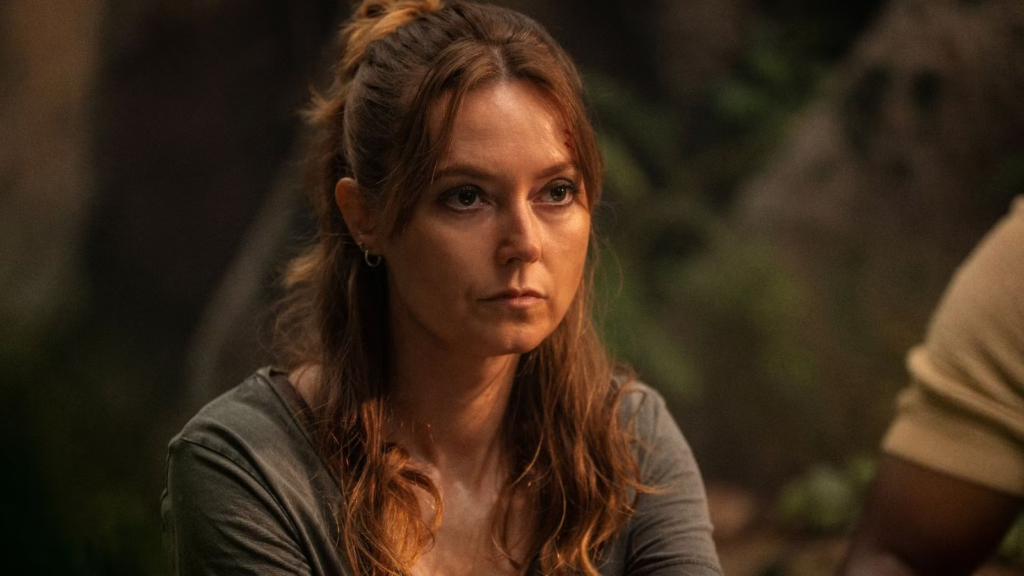
Nine Bodies in a Mexican Morgue has attracted attention for its blend of survival thriller and traditional murder mystery elements. It stands out because it does not follow a straightforward genre formula, instead combining psychological drama, investigative storytelling, and survival tension.
Viewers are often drawn to its puzzle-like structure. The shifting timelines and incomplete information encourage active engagement, as audiences try to piece together what actually happened. This interactive viewing experience is one of the reasons the series has gained strong interest among mystery fans.
The show also contributes to the modern evolution of the “locked-room mystery” genre by expanding it into an open environment like a jungle while still maintaining a closed group of suspects. This contrast between openness and confinement is a key reason the story feels unique and memorable.
Conclusion: The Lasting Impact of Nine Bodies in a Mexican Morgue
Nine Bodies in a Mexican Morgue succeeds because it combines survival storytelling with a carefully constructed mystery framework. The result is a narrative that is both emotionally intense and intellectually engaging, requiring viewers to constantly question what they are seeing.
By using a plane crash, jungle isolation,Nine bodies in a mexican morgue and a morgue-based investigation, the series creates a multi-layered structure that explores both physical survival and psychological unraveling. The story is not just about death, but about how truth becomes fragmented under extreme conditions.
Ultimately, the series leaves a lasting impression because it reflects a deeper reality about human behavior: when people are placed in situations of fear, isolation, and uncertainty, the line between truth and perception becomes increasingly difficult to define.